It's 10 AM.
You've already gotten the kids ready for school, handled the morning rush, and started your workday.
But you're exhausted.
You're thinking about another cup of coffee, your stomach is starting to growl, and you're wondering how you're possibly going to make it through the rest of the day when you're already running out of energy.
Sound familiar?
If you're also dealing with chronic back pain, that exhaustion can feel even more frustrating. You're already trying to manage your pain while keeping up with everything else life demands of you.
But have you ever stopped to consider whether your breakfast is actually giving your body what it needs to get through the morning?
Your Breakfast Might Be Part of the Problem
For a long time, I didn't fully appreciate how much the balance of my breakfast could affect the way I felt throughout the morning.
I was eating breakfast (usually a bowl of cereal, sometimes 2 bowls), but I wasn't necessarily thinking about whether I was getting the right combination of nutrients to keep me satisfied and energized.
Once I started paying more attention to balancing protein, fiber, and fat, I noticed a significant difference.
My energy became steadier and more sustainable throughout the morning.
I wasn't experiencing those noticeable drops in energy that left me looking for caffeine or something sweet to help me stay alert.
In fact, I was able to reduce my caffeine intake because I realized I didn't need as much caffeine to get through the morning anymore.
And something else changed.
My stomach wasn't growling halfway through the morning!
Instead of feeling hungry an hour or two after breakfast, I was actually staying satisfied until lunchtime.
I also noticed that I wasn't constantly craving something sweet for a quick burst of energy.
For me, it was a noticeable difference in how I felt, simply from changing the way I put together my breakfast.
Why Some Breakfasts Leave You Hungry an Hour Later
Think about some common breakfast choices.
Maybe you grab a piece of toast before heading out the door.
Or you eat a bowl of cereal, a muffin, or a granola bar because it's quick and convenient.
But depending on the portion and what you pair them with, they may not provide enough protein, fiber, or overall nourishment to keep you satisfied for very long.
The goal is to build a breakfast that provides a more balanced combination of nutrients.
Here's why that matters.
Protein Helps Keep You Satisfied
Protein supports muscle maintenance and repair, along with many other important functions throughout the body.
It also contributes to feelings of fullness.
If your breakfast is primarily carbohydrates with very little protein, adding a protein source may help you stay satisfied longer.
Think about pairing toast with a protein-rich smoothie or adding protein powder to your oatmeal.
Fiber Helps Slow Things Down
Fiber supports digestive health and can help slow the absorption of carbohydrates, depending on the type of fiber and the meal.
That can contribute to a more gradual blood glucose response and help you feel satisfied after eating.
Some breakfast-friendly fiber sources include oats, chia seeds, ground flaxseed, berries, and whole-grain bread.
Carbohydrates Give Your Body Energy
Carbohydrates sometimes get a bad reputation, but your body needs energy to function.
Whole grains, fruits, and other carbohydrate-containing foods provide fuel for your brain and muscles. Many also contain important vitamins, minerals, and fiber.
Rather than avoiding carbohydrates, focus on combining them with protein, fiber, and healthy fats.
Healthy Fats Help Round Out Your Meal
Healthy fats are another important part of a balanced breakfast.
They support normal body functions and can contribute to satisfaction after eating.
Foods such as chia seeds, ground flaxseed, avocado, and olive oil can help you incorporate healthy fats into your meals.
You don't need every breakfast to be perfect.
The goal is to give your body a combination of nutrients that helps you feel nourished and satisfied.
What Does This Have to Do With Chronic Back Pain?
If you're living with chronic back pain, you may already know how exhausting it can be.
Pain can interfere with sleep, increase stress, and make everyday activities feel more demanding.
And when you're already tired, hungry, or struggling to concentrate, managing everything else can feel even harder.
Nutrition isn't a cure for chronic back pain, and a balanced breakfast isn't going to repair a damaged disc or eliminate every source of fatigue.
But adequate nutrition supports your overall health, muscle maintenance, and the energy your body needs for daily activities.
That includes the walking, physical therapy exercises, and strength training that may be part of your back pain management plan.
I often talk about looking beyond the spine when you're dealing with recurring back pain.
Part of that means considering the everyday habits that influence how your body feels and functions.
And breakfast is one place where you can start making small, manageable changes.
My Go-To Breakfast for Steady Morning Energy
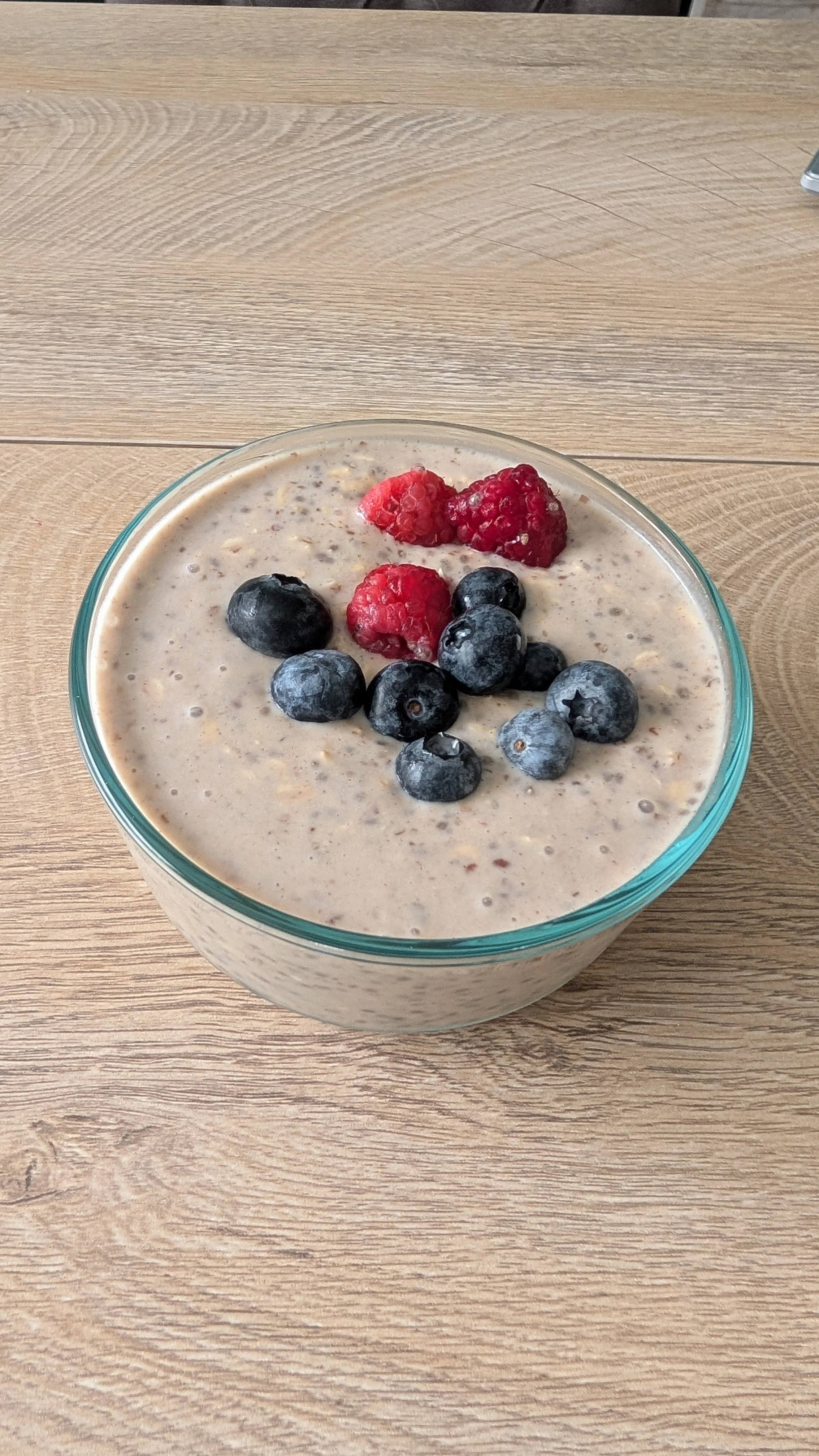
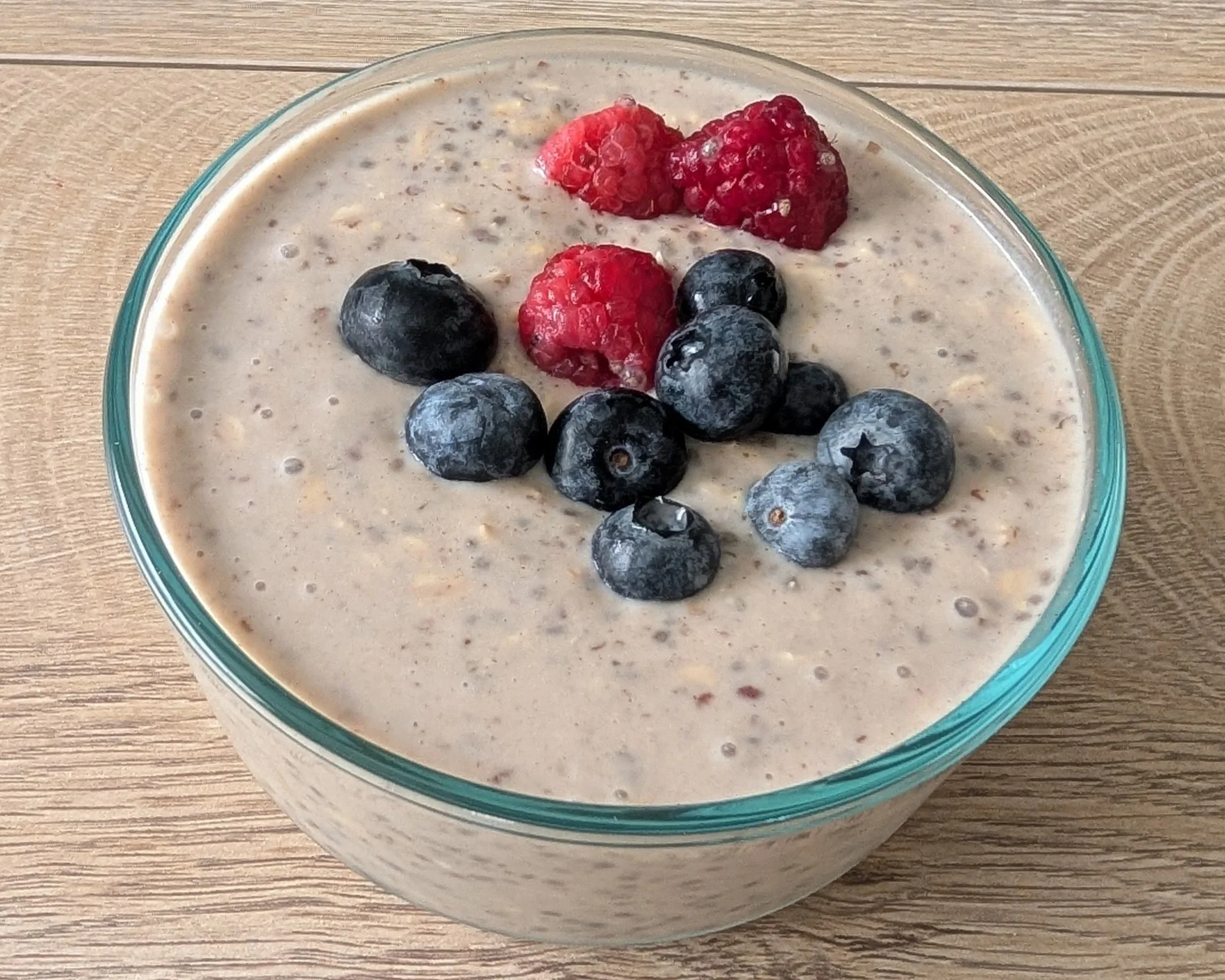
One breakfast I've come to really enjoy is overnight oats.
I love that I can prepare them ahead of time, especially on busy mornings when I don't want to spend time cooking.
But what I really appreciate is how easy it is to combine several important nutrients in one meal.
Here's what I include in my overnight oats:
Rolled oats: A source of complex carbohydrates and fiber.
Protein powder: Helps increase the protein content of my breakfast.
Chia seeds: Provide fiber and healthy fats.
Ground flaxseed: Adds fiber and plant-based omega-3 fatty acids.
Collagen: Contributes additional protein, although it isn't a complete protein source.
Coconut milk: Adds moisture and, depending on the brand and type, some fat.
Cinnamon: Adds flavor (and it's been shown to have anti-inflammatory effects - bonus for back pain!)
A little honey: Provides sweetness.
A pinch of salt: Helps balance the flavors.
I also like topping my oats with fruit. Fruit with the skin on provides a little extra fiber plus some antioxidants to help with overall health!
It's a simple breakfast that I can prepare the night before (or meal prep an entire week's worth at once), and it helps me start the day with a combination of protein, fiber, carbohydrates, and fats.
You don't have to eat overnight oats to build a balanced breakfast, though.
The same idea can work with a smoothie, whole-grain toast, or another breakfast you already enjoy.
Start With One Small Change
If you're regularly exhausted by midmorning, constantly hungry before lunch, or reaching for something sweet to get through the day, take a closer look at what you're eating for breakfast.
You don't have to overhaul your entire morning routine.
Maybe you add protein powder to your oatmeal.
Maybe you pair your toast with a protein-rich smoothie.
Or maybe you start adding chia seeds, ground flaxseed, or berries to a breakfast you already love.
Start with one change and pay attention to how you feel.
Are you staying satisfied longer?
Do you notice fewer energy dips?
Are you reaching for caffeine or snacks less frequently?
Those observations can help you understand what works best for your body.
And remember, breakfast isn't the only possible reason you're feeling exhausted. Poor sleep, ongoing pain, stress, medications, and medical conditions can all contribute to fatigue. Persistent or unexplained fatigue deserves a conversation with your healthcare provider.
Small Changes Can Make a Big Difference Over Time
One of the biggest lessons I've learned through my own health journey is that supporting your body doesn't have to mean changing everything overnight.
Sometimes, it starts with something as simple as building a more balanced breakfast.
For me, that meant steadier morning energy, less reliance on caffeine, fewer cravings for sweets, and feeling satisfied until lunch.
And those are benefits I genuinely appreciate, especially when I'm balancing work, family, and staying active.
If you're managing chronic back pain while trying to keep up with everything else life throws at you, you deserve to feel nourished and supported throughout your day.
Your breakfast may not solve every problem, but it can be one small piece of the bigger picture.
Ready to Look Beyond Your Back Pain?
If you're dealing with recurring back pain and wondering whether nutrition and lifestyle factors could be influencing how you feel, I've created a free guide to help you explore that question.
7 Unexpected Reasons Your Back Pain Keeps Flaring Up introduces several factors beyond the spine that may deserve attention.
You don't have to change everything at once. Sometimes, one small, consistent change is a great place to start.
If this resonates with you, follow along on Instagram at @alera_functional_health where I share more root-cause health and inflammation support strategies.
If you’d like a personalized plan that fits your life and helps you feel your best, I’m here to help. Interested in learning more about how you can optimize your health and finally find relief from your symptoms? Schedule a free Discovery Call with me by clicking here.

About The Author
Erin Briley is a Certified Functional Nutrition Coach and founder of Alera Functional Health. She helps people with recurring back pain look beyond the spine to identify often-overlooked factors that may be influencing how they feel, including nutrition, sleep, stress, digestion, inflammation, and recovery.
After experiencing years of chronic back pain, multiple surgeries, and a failed spinal fusion herself, Erin understands how frustrating it can be when pain continues to interfere with the things you want to do. Her approach focuses on practical, sustainable changes that support the whole body and help clients better understand their individual patterns, so they can spend less time organizing their lives around back pain.